


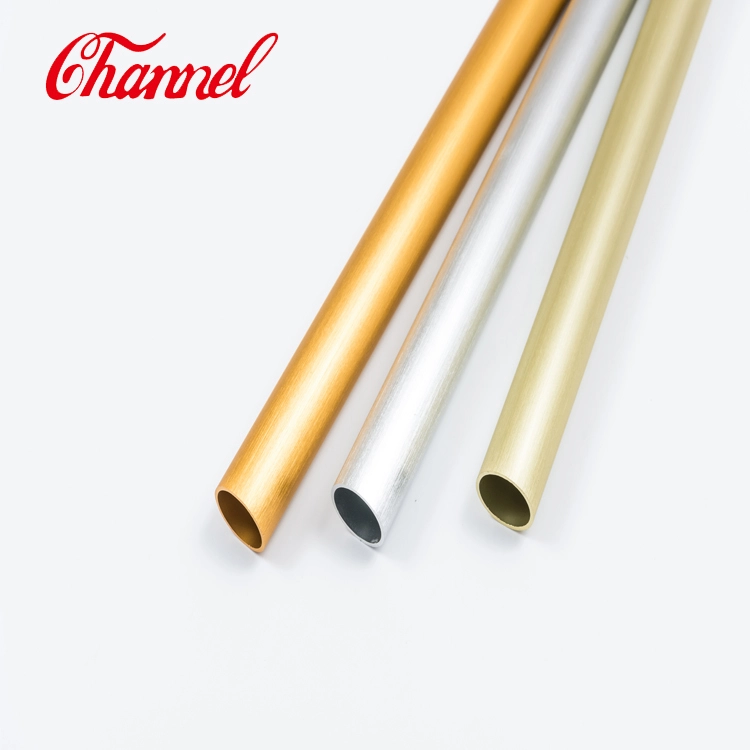
6061 6063 Round Aluminum Tube Extruded Aluminum Pipe for Telescopic Poles, Handles and Frame Assemblies
6061 and 6063 Round Aluminum Tube
This round aluminum tube is extruded from 6061 and 6063 alloy for customers who need a clean, circular section for telescopic poles, frame assemblies and everyday metalwork. Round sections are the most versatile shape in the aluminium range: they are easy to drill and join, they slide inside one another for telescoping, and they carry bending loads evenly in every direction.
How the Tube is Made
Aluminium billet is heated and pressed through a circular die to form the hollow profile, then cooled, stretched and straightened before being cut to the ordered length. This extrusion route gives a continuous tube with a uniform wall and a reliable round section along the whole length. Straightness is checked after stretching, which keeps long poles true and easy to align during assembly.
Choosing Between 6061 and 6063
6063 is the common choice for poles and visible frames because it extrudes to a smooth surface and takes anodising well, giving a bright finish that resists handling marks. 6061 is the stronger grade and is selected when the tube is threaded, clamped hard or used in a load bearing frame. Both alloys offer good corrosion resistance and are straightforward to cut, drill and tap in the workshop.
Telescopic Fit and Sizing
For telescoping sections, the outer diameter and wall thickness of the larger tube are matched to the outer diameter of the smaller tube so the two slide together with the clearance you need. Sizes are confirmed against the drawing before production, and the wall thickness, diameter and length tolerance are checked at the end of the line so the sections fit as planned.
Typical Applications
- Telescopic poles and extension handles
- Tent and canopy frame sections
- Display stands and exhibition frames
- Handrails, guard rails and balustrades
- Bicycle, scooter and cart frames
- General workshop and repair metalwork
Inspection on Dispatch
Each batch is measured against the agreed specification. Diameter, wall thickness, straightness and surface condition are recorded, and any special inspection or documentation is arranged when requested before the order is placed. The goal is tube that drops straight into the assembly without rework.
FAQ
Can two sizes be supplied to telescope together? Yes. Tell us the outer diameter of both sections and the clearance required, and the sizes will be matched before production.
Which alloy suits anodised poles? 6063 usually gives the cleanest anodised surface, while 6061 is preferred where extra strength is needed.