


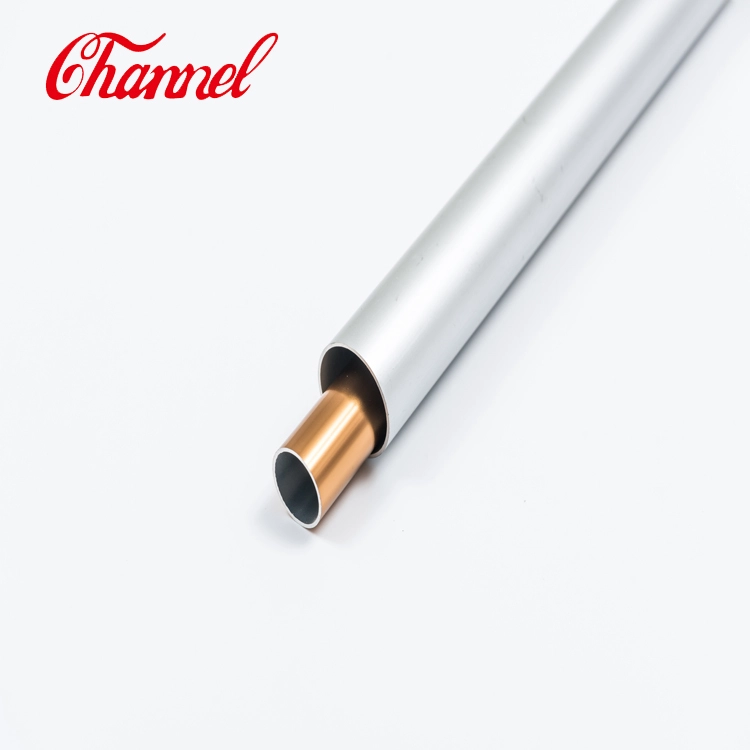
Precision Drawn Aluminium Tube Aluminum Tube 17mm Aluminum Tube
Aluminum Tube Product Overview
Aluminum tubes are hollow sections made from aluminum and aluminum alloys. Aluminum is a light metal that resists corrosion and can be formed into many shapes. Because a tube is hollow rather than solid, it reduces weight while still providing stiffness and strength along its length. This combination of low weight and useful mechanical properties is why aluminum tubing appears in so many products and industries.
Material Characteristics
Aluminum is known for its high strength-to-weight ratio, so a part made from aluminum can carry a meaningful load while weighing much less than a similar part made from a heavier metal. Its surface naturally forms a thin oxide layer that helps resist corrosion in ordinary environments. Aluminum is non-magnetic, performs well at low temperatures, and can be recycled, which makes aluminum tube a practical choice for structural and non-structural uses.
Shapes and Profiles
Aluminum tube is produced in a variety of cross sections. Round tube is the most familiar form and is often used where bending or a smooth appearance is required. Square and rectangular tube offer flat sides that are convenient for joining. Custom profiles can also be produced to suit a particular assembly. The choice of profile depends on how the tube will be used and connected.
Common Applications
Aluminum tubes are found in frames, supports, poles, rails, and structural assemblies. They are used in furniture, display systems, lighting fixtures, tents and outdoor equipment, vehicles, and general fabrication. Because tubes can be cut, bent, drilled, and joined, they suit projects where a lightweight but rigid member is needed.
Fabrication and Forming
Aluminum tube can be made through several production routes. Extrusion pushes heated aluminum through a shaped die to create a continuous profile, while drawing is used to reach a more precise shape and smoother surface. Common secondary operations include cutting to length, bending, punching, and machining before the tube is assembled into a finished product.
Surface and Finish Options
The surface of an aluminum tube can be left in its natural mill finish or treated in different ways. Anodizing thickens the natural oxide layer and can add color. Powder coating and painting are also common when a specific appearance or extra protection is wanted. The most suitable finish depends on where the tube will be used and how it needs to look.
Model | Aluminum/Aluminium lube/Pipe |
Material Grade | 1000 series: 1050,1060,1070,1080,1100,1435, etc. 2000 series: 2011, 2014,2017,2024, etc. 3000 series: 3002,3003,3104,3204,3030 , etc. 5000 series: 5005,5025,5040,5056,5083, etc. 6000 series:6101,6003,6061,6063,6020,6201,6262,6082, etc. 7000 series: 7003,7005,7050,7075, etc. |
Size | Outer Diameter:3-250mm Wall Thickness: 0.3-50mm Length: 10mm-6000mm |
Standards | ASTM,ASME,EN ,JIS, DIN,GB/T , etc. |
Surface treatment | Mill finished , anodized , powder coating, Sand blast, etc. |
Surface colors | Nature, silver, bronze, champagne, black, golden, etc. As customized |
Status | Nature, silver, bronze, champagne, black, golden, etc. As customized |
Usage | Aluminum profile for windows/doors/decoration/construction/curtain wall |
Quality | China Nation Standard GBT |
Packing | Protective film+plastic film or EPE+kraft paper |
Certificate | ISO 9001 2008 |
MOQ | 1 tons.Usually 12 tons for a 20 feet container; 24 tons for a 40 feet container |
Press Machine | 500-4000 tons all together 64 press lines |
Moulding | 1.Using our moulds, no fee; 2.Using customer drawing , opening mould , usually about 5 tons the moulding fee is free; 3.Can be discussed. |