


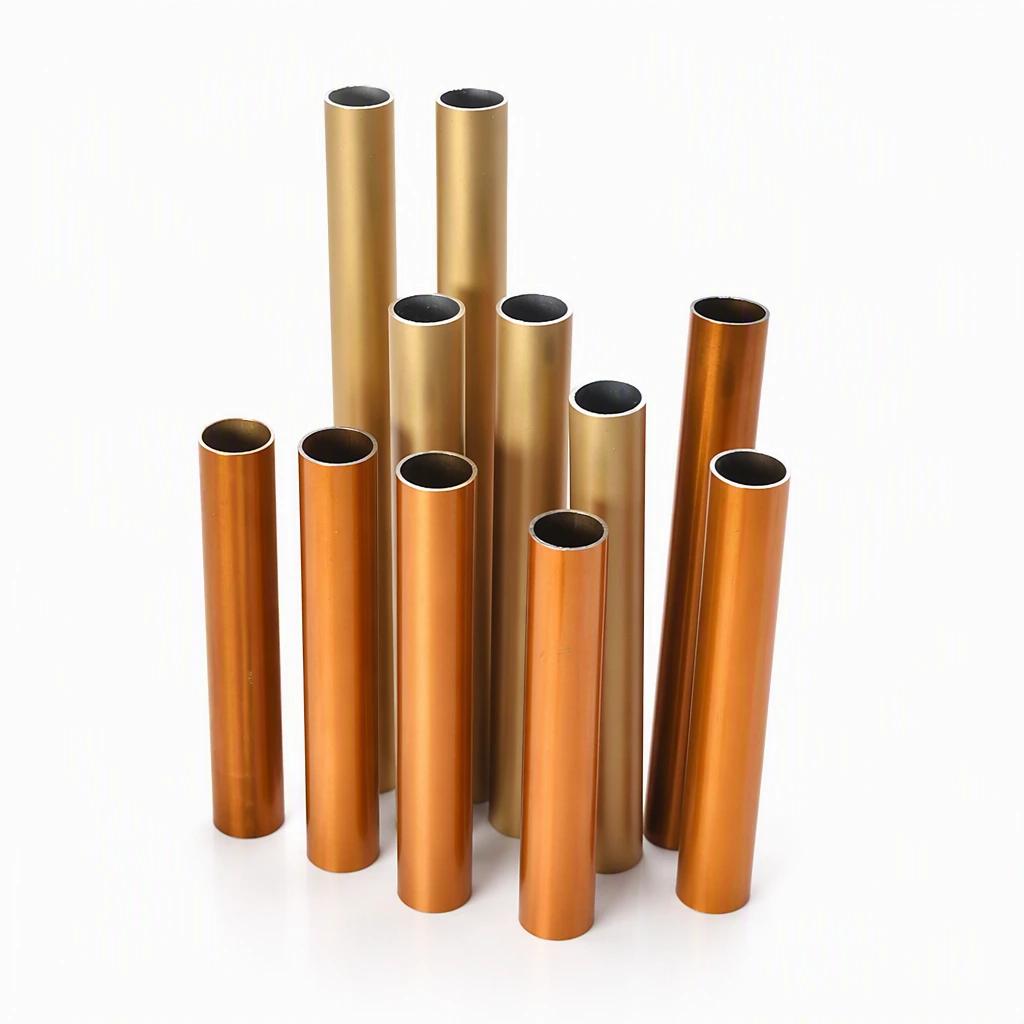
Smooth Surface Aluminum Tube Drawn Aluminium Pipe Precision Od Tolerance Tubing For Printer Roller Shaft Machinery Equipment
Smooth Surface Aluminum Tube Overview
Smooth Surface Aluminum Tube is a round aluminium pipe formed by drawing, which gives the material a clean outer skin and a steady cross section along its length. Because it is made as precision OD tolerance tubing, the outside diameter stays close to the nominal size, so the pipe suits parts where a straight and even tube body is required. Typical use includes printer roller shafts and other machinery equipment components that call for a neat, rounded pipe rather than a rough or irregular section.
Material And Forming
The tube is produced from aluminium, a light metal widely chosen for tube and pipe work because it combines low weight with easy shaping. Drawing pulls the material through a die so that the wall thickness and the outside diameter are brought to the intended size, and the surface comes out smooth. Extruded aluminium pipe follows a similar route, and both drawn and extruded forms are supplied as round tubing for general engineering use. Aluminium tube of this type is commonly worked by cutting, drilling, bending and joining, and it can be machined on standard equipment or welded, which makes it practical for simple shafts as well as more detailed assemblies.
Surface And Appearance
The drawn finish gives the aluminium pipe a smooth face that is free from heavy marks, which helps when the tube is used as a visible part or as a roller shaft where a clean look matters. A neat surface also supports later steps such as anodizing, polishing or coating, because the base tube is even and regular before any finishing work is added.
Precision OD Tolerance Tubing
For roller shafts and similar parts, the outside diameter of the tubing is the key feature. Precision OD tolerance tubing keeps the round section close to size so that bearings, sleeves, rollers or mounts can be fitted with less adjustment. A uniform diameter along the full length also supports straight running in rotating assemblies.
Applications And Handling
This aluminium tube is used in printer roller shafts, machinery equipment frames and general tube components, where it can act as a shaft, a spacer, a support or a light structural member. Tubing should be stored and handled so the surface is not dented or scratched, and cutting or machining is best done with tools and speeds suited to aluminium.